Are Colorized Family Photo Colors Accurate? A Color-Confidence Ledger
AnimaMoments ·
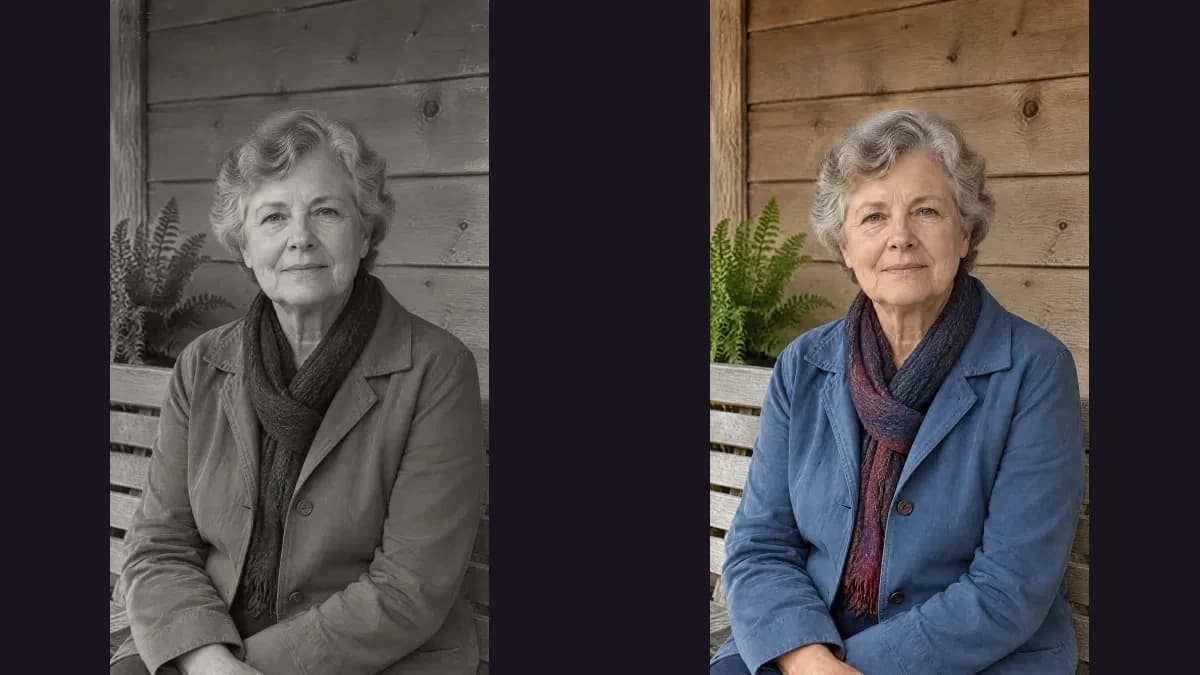
A colorized family photo does not reveal its original colors: without independent evidence, its hues are generated interpretations. Use this ledger to separate documented references, relatives’ recollections, and unknown colors before you share the image.
A ledger for color confidence
Record each visible area separately. A color may be documented in one part of a photo and uncertain in another; confidence in the overall image is not all-or-nothing.
Independent reference: a source outside the colorized image supports the color, such as a surviving garment, a contemporaneous color photograph, or a reliable written record. Note exactly what the source covers and how closely it matches the person, object, and time.
Reported memory: identify who remembers the color, their connection to the person or object, and whether the memory is direct or repeated. A relative’s recollection can be valuable family testimony, but it is not independent visual confirmation.
Generated or unknown: the colorizer supplied a plausible hue, but no separate evidence verifies it. Plausibility, period style, and a natural-looking result do not establish what the original color was.
Worked example: scarf, jacket, and background
Imagine a monochrome portrait of a fictional older adult woman on a wooden veranda. A colorized version adds hues to her woven scarf, jacket, and the wall behind her. No separate reference image or family recollection is available, so none of those displayed hues can be called verified.
Scarf — Evidence: no surviving garment or independent color image. Ledger entry: generated / unknown. The monochrome source records light and dark, not the scarf’s original hue.
Jacket — Evidence: no written description or independent color reference. Ledger entry: generated / unknown. An attractive or period-plausible color is still an interpretation.
Veranda wall — Evidence: the monochrome source shows texture and shade, but no independent hue reference exists. Ledger entry: generated / unknown. If a relative later remembers the scarf as green, revise only that row to “reported memory” and record who remembers it. Do not promote it to “independent reference” unless another source supports it. Keep the original monochrome image alongside the colorized interpretation.
Copyable ledger and captions
Copy this blank ledger entry for each important area: Detail: [scarf, jacket, skin, hair, eyes, wall or object]. Independent reference: [specific source, or none]. Reported memory: [who remembers what, or none]. Generated / unknown: [unsupported color details]. Notes: [limits and date of the supporting reference]. Mark only what the evidence supports; do not write “verified” without naming the reference.
Caption with no independent color evidence: “Colorized interpretation of a monochrome family photograph. The added colors are generated and are not verified as the original hues.”
Caption that includes a relative’s recollection: “Colorized interpretation of a monochrome family photograph. [Name] remembers the scarf as green; other added colors are generated and unverified.” Replace the bracketed text only with a real attribution, and keep the memory distinct from documented evidence.
Check the prepared image, not an assumption
A colorization tool can add plausible color during image preparation, but it cannot recover missing color as historical fact. Review the actual prepared still against the monochrome source: check whether the person remains recognizable, whether clothing and background are interpreted rather than treated as evidence, and whether any unexpected changes make the result unsuitable to share.
Keep the untouched monochrome original and label the colorized copy. A prepared still is a single image, not an animation; it does not show that motion was generated or that any historical event occurred.
Using Colorize for an illustrative still
AnimaMoments’ Colorize style can prepare a colorized image from one uploaded photograph. The example below uses a newly created fictional monochrome portrait, not a family archive image. Its colorized still can illustrate the difference between a monochrome source and a generated interpretation; the pixels alone cannot tell us which original hues, if any, are accurate.
The example is a prepared still only. It is not a completed animation, a controlled comparison, or independent evidence about historical color.
Illustrative example
A synthetic portrait and its color interpretation
This illustration starts with a newly generated monochrome portrait of a fictional adult woman, age 65, seated on a wooden veranda. She wears a plain woven scarf and a simple jacket. One actual Colorize preparation produces the accompanying still. The source contains no color reference, and no separate reference image or family memory is used. The colors in the prepared image are therefore an interpretation, not recovered fact. Review the visible face, scarf, jacket, and background against the source, preserve the monochrome original, and label the copy clearly. No video was generated or reviewed.
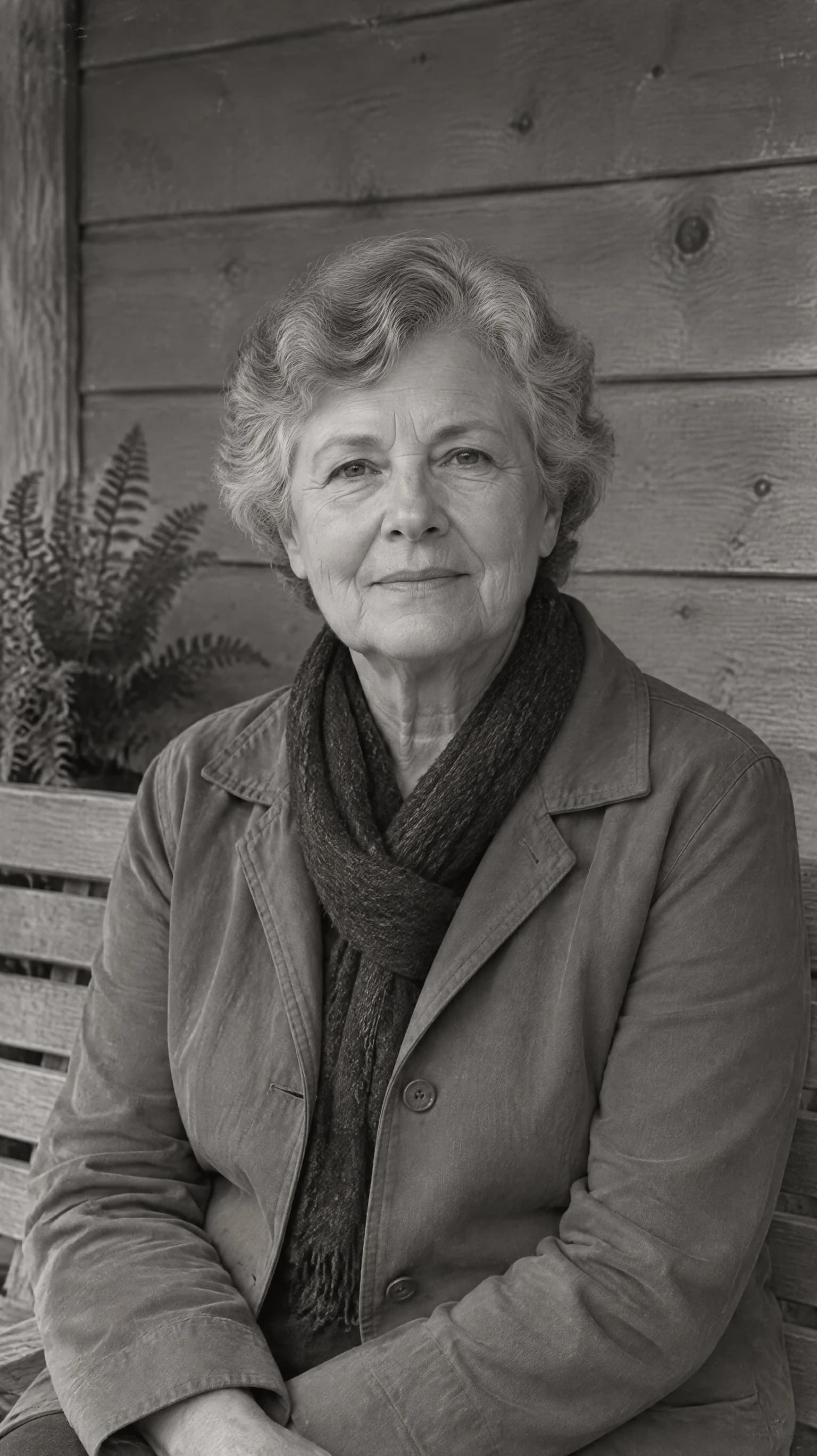
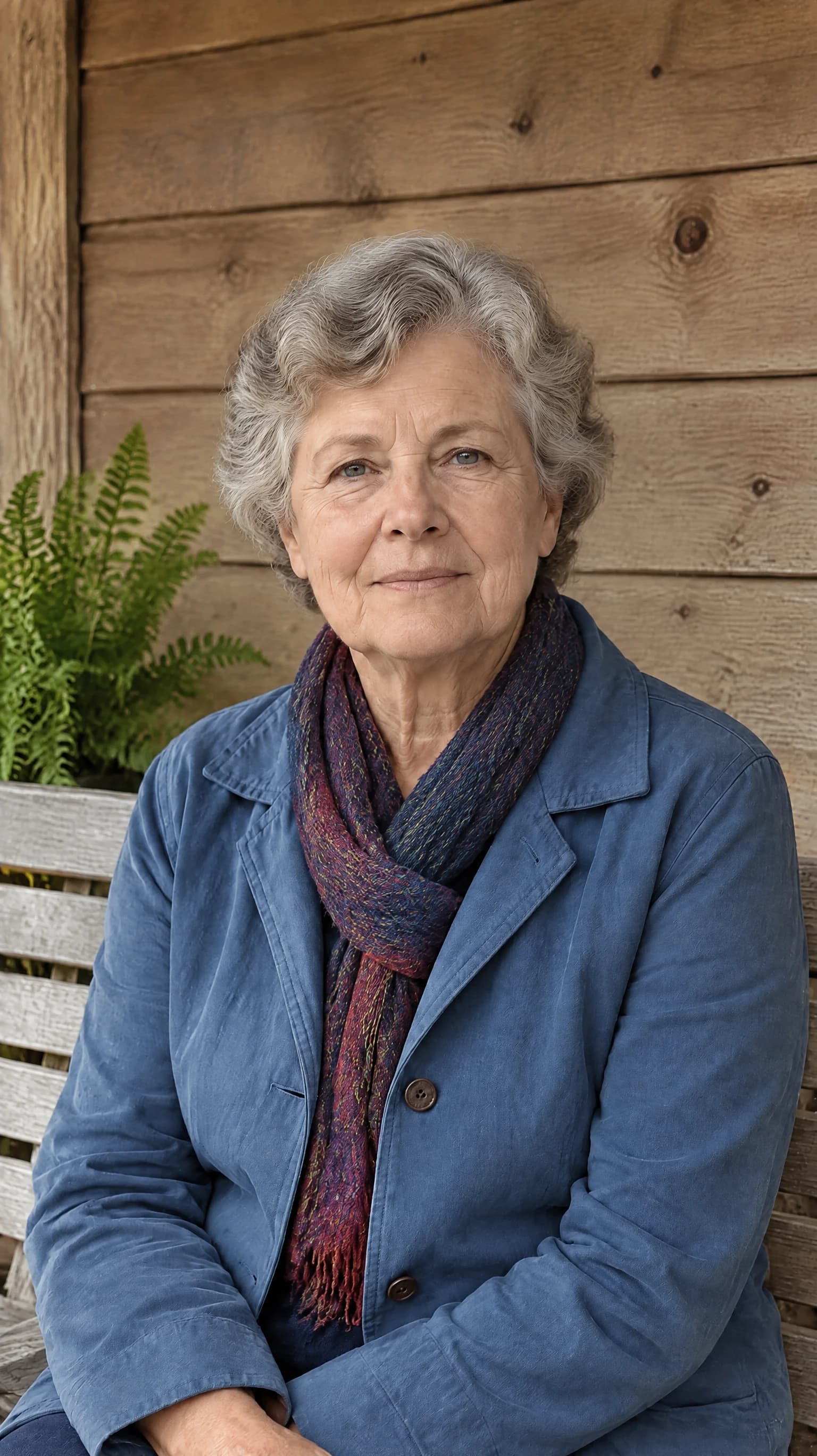
A fictional older adult woman seated on a wooden veranda in a monochrome portrait, shown beside a colorized interpretation. The original colors are unknown; this is a synthetic illustration, not a historical photograph.
All example media use synthetic inputs and depict fictional adults or pets, objects, or settings described in this example. This is an illustrative example, not a customer result; outcomes vary.
Frequently asked questions
Does a plausible color mean it was the original?
No. A plausible or natural-looking hue is not evidence of the original color. Treat it as generated unless a separate source supports it.
How should I label a relative’s remembered color?
Call it a reported memory, name the relative if they agree, and say which item they remember. Do not present recollection as independent photographic or documentary verification.
Does a prepared color image prove an animation was generated?
No. A prepared still is one image and cannot show generated motion. Play the actual video to review an animation; this example supplies only a prepared image.